Whoa! Okay, start here: a cold, credit-card-shaped piece of tech that actually holds your crypto keys and nothing else. Seriously? Yes. At first glance it looks like one of those novelty cards you get at a conference. But my gut said this was different the moment I tapped it on my phone. Something felt off about how simple it was — in a good way. I’m biased, but if you want a hardware wallet you can carry in a wallet without looking like you swallowed a USB stick, Tangem’s card deserves a real look.
Short version: it’s a secure element embedded in plastic, NFC-enabled. You tap to sign. No cables. No PINs that you type into a browser. No seed phrase you write on paper and misplace. Sounds dreamy. But it’s not magic. There are trade-offs. I’ll walk you through what it is, how the Tangem Wallet and Tangem app work with the card, and where you might hit bumps.
Let me be blunt: the biggest draw is friction reduction. I had one mixed up with a hotel key once — embarrassing, but also telling. The card blends into daily life. You can literally slide it into your wallet. That everyday-ness lowers user error. And lower user error often equals better real-world security, which is what matters most.
A quick, practical look at how Tangem works — and why that matters
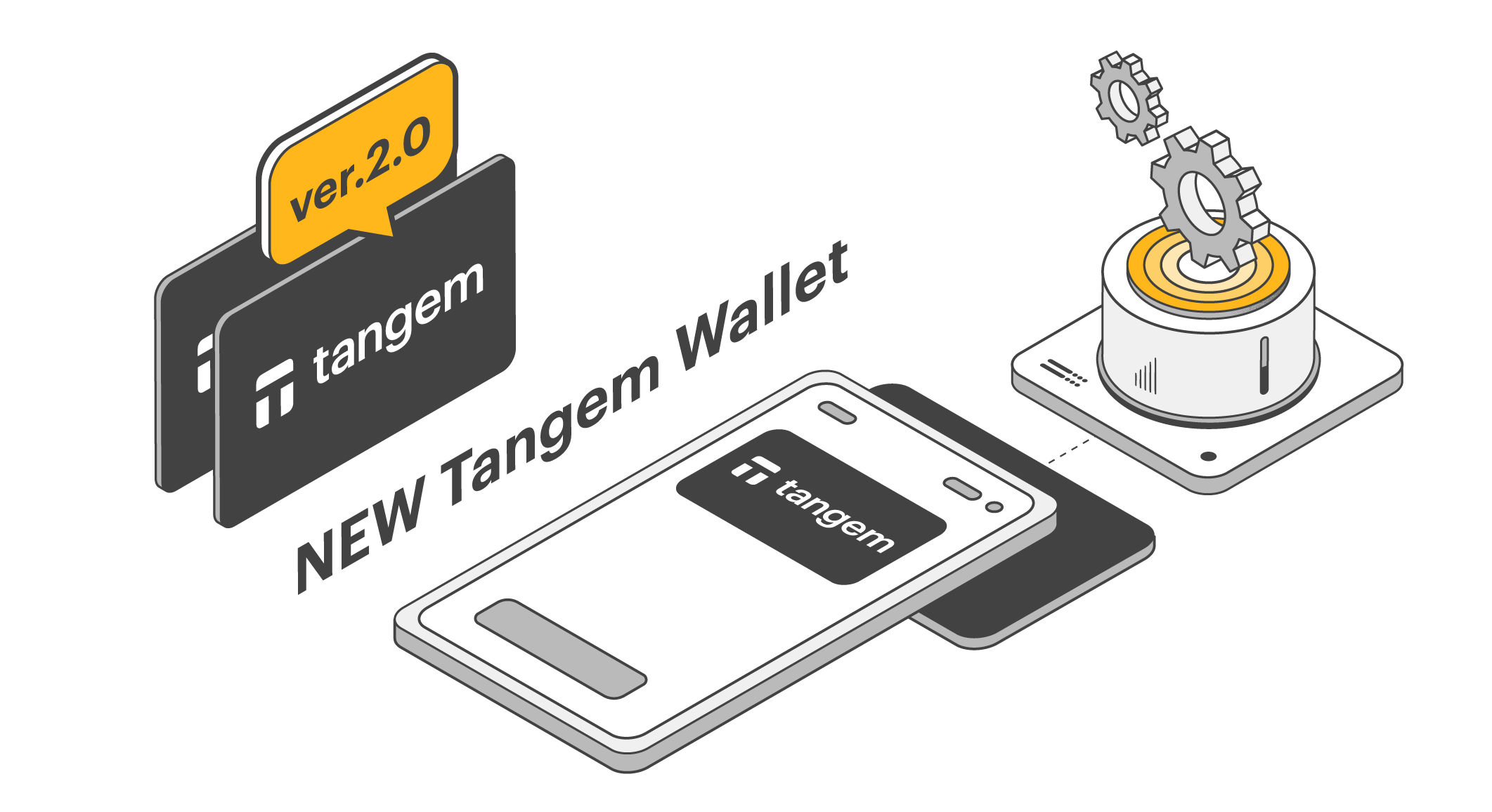
Tangem cards are NFC smartcards with an on-board secure element. Tap the card to a phone running the Tangem app. The app reads the public key. The private key never leaves the card. Transactions are signed inside the chip. Simple. Fast. Neat. My instinct said this was too easy to be secure. Then I dug in. On one hand the design removes many human attack-vectors; on the other hand it concentrates trust into a physical object you can lose, which is somethin’ to plan for.
Pros first. The card’s form factor is brilliant because it normalizes hardware security. People actually carry it. They actually use it. No complex firmware flashing. No fiddly cables, no specialized readers. For non-tech family members, that’s gold. The Tangem app adds UX polish: it’s clear, uncluttered, and gets out of your way. On my phone the pairing/tapping flow was smooth. Really smooth.
Now the caveats. If you lose the card, you lose access unless you’ve set up a recovery plan. Tangem’s model differs from seed-based wallets: many Tangem variants use cards that each hold a private key without exposing a mnemonic. That avoids seed-phrase theft, but also changes recovery dynamics. So think ahead — and yes, you should have redundancy. Buy a second card and treat it as a backup, or use Tangem’s backup options where supported. I’m not 100% sure about every advanced enterprise workflow here, but for personal use there’s a clear path.
Security-wise, Tangem relies on certified secure elements. These chips are built to resist tampering, side-channel attacks, and extraction. That’s not hand-wavy marketing talk — it’s industry practice. However, the card’s security also depends on manufacturing integrity and supply chain controls. If someone intercepts cards before you buy them, there’s risk. Buy from trusted channels. Don’t get them off a sketchy auction. This part bugs me; attackers often target supply chains because it’s low-effort and high-payoff.
One more quick note: because interaction is NFC-based, you need a compatible phone. Most modern Androids and many iPhones support NFC in the way Tangem requires, but double-check compatibility for older phones. Also, always update the Tangem app from official sources. The app orchestrates communication; a compromised app would be a weak link.
How the Tangem Wallet and Tangem App fit together
The Tangem Wallet (the overall ecosystem) and the Tangem app (the phone interface) are deliberate in splitting responsibilities. The card holds keys. The app constructs transactions, queries the network, and requests signatures. The UX aims to be familiar to anyone who’s used a mobile wallet, but it strips away most of the scary bits.
Check this out—if you’re a mobile-first person, this is how it changes behavior: instead of jotting down a 24-word seed and locking it in a safe (or not), you keep a card in your wallet and sign with a tap. It lowers barriers. It also changes the attack surface. Instead of protecting words, you protect hardware. Each approach has trade-offs; there’s no absolute best.
Okay, so practical setup: open the Tangem app, tap the card, the app registers the public key. That’s it. You can send and receive crypto like any mobile wallet. For power-users, Tangem supports multiple cards, multi-sign setups, and certain enterprise features. On the consumer side, the simplicity is the killer feature.
I should mention interoperability: the Tangem ecosystem plays well with many blockchains and some third-party wallets via integrations. That matters if you’re not just holding BTC or ETH. If you’re into NFTs or altcoins, check compatibility before you commit — I once tried to use a card with a little-known token and had to switch tools mid-process. Not the end of the world, but a reminder: check chain support.
Where Tangem shines — and where to be careful
Shines: portability, ease of use, privacy (no mnemonic to reveal), and low daily friction. Tangem cards are great for people who want secure custody without the nerdy overhead. They’re also excellent for gifting crypto — handing someone a card is way more approachable than telling them to seed an HD wallet.
Be careful about loss and backups. Tangem cards reduce human error but they also make loss a physical problem. You should think in terms of multiple independent cards or a supported recovery scheme. I keep a spare in a different location. Old-school, but effective.
Also, social engineering remains the wildcard. If someone convinces you to tap your card on a device they control, they could trick you into signing malicious transactions. Protect your tap. Treat the card like a key — because it is one.
Want more details? FAQs
How does Tangem compare to seed-based hardware wallets?
Different philosophy. Seed-based wallets give you mnemonic recoverability but require careful seed storage. Tangem focuses on a physical key in a secure element, avoiding exposed seed phrases. That reduces some user mistakes but requires you to plan for physical loss or destruction. Many users combine approaches: a seed-based wallet for large, long-term holdings and Tangem cards for everyday use.
Can Tangem cards be cloned?
Not practically. The secure element prevents private key extraction. You can’t just copy the card like a file. That said, if an attacker had full physical access to the card and exceptional resources, hardware attacks are theoretically possible. For regular threats, it’s very robust.
Alright, final thought: the Tangem card feels like a practical middle ground between cold-storage paranoia and hot-wallet convenience. It’s not perfect. Nothing is. For folks who want strong protection with minimal hassle, it’s a compelling option. For those who demand full seed control and maximum recoverability in any scenario, you might prefer a different approach. Me? I carry one. I also keep a backup. Which tells you something — I’m cautious, not obsessive.
So yeah. Try one if the form factor appeals. Test it with small amounts first. And don’t forget a backup plan — very very important. The card is simple, but life is messy. Plan accordingly.




































 В отделении «Родничок» учитель-дефектолог Панченко Елена Юрьевна начала внедрение новой реабилитационной технологии «Игровой массаж»
 В рамках реализации проекта «Мамино время» в отделении «Родничок» в швейной мастерской мы завершили работу над нашим изделием
 Воспитанники отделения «Маяк» посетили воскресную школу при Храме Александра Невского в Балашихе
 Подопечные из стационарных отделений совершили душевное паломничество в Троицкий храм города Реутов
 Для воспитанников отделения Маяк состоялся мастер- класс на тему «Предметная съёмка гончарных изделий к Пасхе»